This is the last thing I should be doing right now, but I was just looking through Joan Didion, "Goodbye to All That," in Slouching Towards Bethlehem again, and this jumped out at me:
I think sometimes this is how I feel about Seattle, and I wonder if I will ever go back, even though if you know me at all you know how much I love the city and miss my family. Of course, the more I think about it, the more it seems that I probably felt somewhat like this about Houston as well. Maybe for Houston, and for Seattle too--I can't go back, because I am not that young anymore.
Wednesday, December 2, 2009

Sunday, November 29, 2009
Resurrected and rechristened; Munro and Almodóvar
So I've decided to resurrect this blog, and rechristen it as a blog about the narrative arts. Which is really just a pretentious way of saying that I'll be focusing on pieces I've read or I've seen. Most of these will be fictional accounts of course, so novels and movies, but I'm also interested in narrative non-fiction, whether in text (e.g. long-form narrative essays/articles) or film form. I have more than enough outlet at work for any sort of bioethics/health/policy what-have-you, and this isn't really a great medium for that kind of discussion anyway, except as it relates to the idea of narrative. So I'll be editing what's on this blog accordingly.
So, now that I've got the boring part out of the way, I was just thinking about Alice Munro and Pedro Almodóvar. I have more exposure to Munro than Almodóvar, but I think there's a kinship in their work. I'll write more later, but in short, I think they are both great at non-judgmental portrayals of real, flawed, complicated women, and I kind of love that about both of them. (In Almodóvar's case, these portrayals are even affectionate; I haven't decided with Munro, though there is definitely a warm respect). Plus, there is a combination of sensational events, coincidence, and irony in their character-driven plots, but somehow their stories don't seem overly dramatic or sentimental.
ETA: So I googled to see if there was anything linking Almodóvar and Munro, and it looks like Almodóvar was reading her while writing the script for his current movie, Broken Embraces. In fact, he says that he wrote the script "in the shadow of" Hateship, Friendship... and Runaway (he even said he would love to film a story in this!). I wanted to see Embraces before, but I guess I have extra reason to now.
So, now that I've got the boring part out of the way, I was just thinking about Alice Munro and Pedro Almodóvar. I have more exposure to Munro than Almodóvar, but I think there's a kinship in their work. I'll write more later, but in short, I think they are both great at non-judgmental portrayals of real, flawed, complicated women, and I kind of love that about both of them. (In Almodóvar's case, these portrayals are even affectionate; I haven't decided with Munro, though there is definitely a warm respect). Plus, there is a combination of sensational events, coincidence, and irony in their character-driven plots, but somehow their stories don't seem overly dramatic or sentimental.
ETA: So I googled to see if there was anything linking Almodóvar and Munro, and it looks like Almodóvar was reading her while writing the script for his current movie, Broken Embraces. In fact, he says that he wrote the script "in the shadow of" Hateship, Friendship... and Runaway (he even said he would love to film a story in this!). I wanted to see Embraces before, but I guess I have extra reason to now.
Thursday, May 28, 2009
More Alice Munro...
That seems to be the only thing this blog is about these days, but that's because I've been reading a lot of her the past few months. Some great news about Munro: she just won the Booker International Prize (the international prize is for her body of work, whereas the regular Booker prize is for a particular book). Coincidentally, I was reading another piece about why she's not more famous this past weekend, and I wonder if this will do anything to boost her popularity.
Anyway, I just finished Carried Away this past weekend, in which I re-read "Hateship, Friendship, Courtship, Loveship, Marriage" and "The Bear Came Over the Mountain." I know I've written before about how I would probably get more out of the reading if I slowed down; I think that having read them before and knowing what's coming allowed me to do that, and I really did enjoy and appreciate these two stories more. "Hateship," especially. I think my favorite story in the collection was "Carried Away," for the completeness of the story--characters, plot, insight, whatever it is that makes me love Munro's work so much. I'll probably try to get Open Secrets (from which "Carried Away" was taken) from the library before I leave and read the other stories in that book. It looks like four of them were compiled in Carried Away, so I might not have much more to read. I will definitely have to purchase Carried Away when I have the money.
Right now I'm reading Runaway, and this passage caught my attention:
I guess the past few years I've been thinking a lot about home; I know my brother has too, he asked this past year when people stopped considering their parents home as their own. Then this last year living with my parents--this passage makes me think back to the things I write about or tell my friends (I'm not always very forthcoming about my personal life; I never have been, really) about being at home, or even the decisions I've made or conclusion I've come to about who those friends are.
Anyway, I just finished Carried Away this past weekend, in which I re-read "Hateship, Friendship, Courtship, Loveship, Marriage" and "The Bear Came Over the Mountain." I know I've written before about how I would probably get more out of the reading if I slowed down; I think that having read them before and knowing what's coming allowed me to do that, and I really did enjoy and appreciate these two stories more. "Hateship," especially. I think my favorite story in the collection was "Carried Away," for the completeness of the story--characters, plot, insight, whatever it is that makes me love Munro's work so much. I'll probably try to get Open Secrets (from which "Carried Away" was taken) from the library before I leave and read the other stories in that book. It looks like four of them were compiled in Carried Away, so I might not have much more to read. I will definitely have to purchase Carried Away when I have the money.
Right now I'm reading Runaway, and this passage caught my attention:
I guess the past few years I've been thinking a lot about home; I know my brother has too, he asked this past year when people stopped considering their parents home as their own. Then this last year living with my parents--this passage makes me think back to the things I write about or tell my friends (I'm not always very forthcoming about my personal life; I never have been, really) about being at home, or even the decisions I've made or conclusion I've come to about who those friends are.
Tuesday, May 5, 2009
Small note on religion and faith
I'm not a very religious person, but I don't denigrate the faith of others, and sometimes I think there is much to be envied in that faith. I just came across a passage in one of Munro's stories about prayer, and I think it's the best passage in fiction I've ever read on faith as a positive force.
Typically, the story also has the other side of faith/religion, regarding this same mother's indifference to her daughter's (the narrator's) desire to be further educated, because according to the mother it doesn't matter to God: "This was the first time I understood how God could become a real opponent, not just some kind of nuisance or large decoration."
Anyway, this also reminds me of my own mother's recent increase in faith. There's been a lot going on in my family the past year, and I think this faith has made her better able to deal with that, and generally mellowed her out. I feel like I've been able to reason with her more that before, in any case.
Typically, the story also has the other side of faith/religion, regarding this same mother's indifference to her daughter's (the narrator's) desire to be further educated, because according to the mother it doesn't matter to God: "This was the first time I understood how God could become a real opponent, not just some kind of nuisance or large decoration."
Anyway, this also reminds me of my own mother's recent increase in faith. There's been a lot going on in my family the past year, and I think this faith has made her better able to deal with that, and generally mellowed her out. I feel like I've been able to reason with her more that before, in any case.
Monday, May 4, 2009
Alice Munro
I've been going back to Alice Munro the past couple of weeks, and I'll probably spend the rest of my time before my fellowship starts reading as much of her work as I can (though maybe I'll take a break for some work-related reading). Sometimes I think I want to read them so fast that I don't appreciate them as much as I could if I just slowed down, but believe me there's plenty for me to think about even at my current pace. I read a review of one of her most recent collections, which captured some of what I find so compelling about Munro's stories:
I guess the things I read that I find most memorable tend to evoke these kind of reflections, particularly fiction. Also, I like that her stories are filled with flawed people (women especially). Or maybe a better way to put it would be imperfect and thus realistic people, and these are the characters that are most likely to lead me to the reflections above. It's funny, but I don't think there were as many of these characters in my favorite books from before (they sort of still are favorites, though I have to admit I haven't felt the need to re-read them recently the way I have in previous years), Wuthering Heights and Pride and Prejudice. Wuthering Heights is full of grotesquely flawed people. Now that I think about it, Pride and Prejudice has many characters that come close to being caricatures; even ostensibly normal people like Elizabeth and Darcy are too perfect for me, I don't find either to be very relatable. Maybe that's why Wuthering Heights always edged out Pride and Prejudice as my favorite--the choices of imperfect (even if grotesque) characters seemed more consequential and compelling. I suppose I had my moments of wanting to be like witty and charming Lizzie, but I pretty much had to acknowledge that I probably had more in common with the much less likeable Fanny in Mansfield Park (which is my dark horse Austen favorite).
Anyway, Alice Munro is apparently vastly underappreciated, the reasons for which are explored in Jonathan Franzen's review (quoted above). I think the only reason I had even heard of her is that I read a review of one of her collections and thought it sounded intriguing, but then I didn't actually go out of my way to read her; instead, I was browsing through my favorite used bookstore some time later and found a copy of that collection, and decided to buy it. I'm not even sure how many of my friends know/read her (aside from the Canadians anyway). I'm trying to think about whether I could recommend her to everybody, but then it's not like all her stories are so character-driven as to be devoid of plot. Actually, some have fantastic plot twists (which to me are great because they arise organically from the characters as well as from the situation), and I think I wrote before that the movie Away from Her was based on one of these stories. So maybe people who care less about characters than I do would still enjoy her as much as I do.
I guess the things I read that I find most memorable tend to evoke these kind of reflections, particularly fiction. Also, I like that her stories are filled with flawed people (women especially). Or maybe a better way to put it would be imperfect and thus realistic people, and these are the characters that are most likely to lead me to the reflections above. It's funny, but I don't think there were as many of these characters in my favorite books from before (they sort of still are favorites, though I have to admit I haven't felt the need to re-read them recently the way I have in previous years), Wuthering Heights and Pride and Prejudice. Wuthering Heights is full of grotesquely flawed people. Now that I think about it, Pride and Prejudice has many characters that come close to being caricatures; even ostensibly normal people like Elizabeth and Darcy are too perfect for me, I don't find either to be very relatable. Maybe that's why Wuthering Heights always edged out Pride and Prejudice as my favorite--the choices of imperfect (even if grotesque) characters seemed more consequential and compelling. I suppose I had my moments of wanting to be like witty and charming Lizzie, but I pretty much had to acknowledge that I probably had more in common with the much less likeable Fanny in Mansfield Park (which is my dark horse Austen favorite).
Anyway, Alice Munro is apparently vastly underappreciated, the reasons for which are explored in Jonathan Franzen's review (quoted above). I think the only reason I had even heard of her is that I read a review of one of her collections and thought it sounded intriguing, but then I didn't actually go out of my way to read her; instead, I was browsing through my favorite used bookstore some time later and found a copy of that collection, and decided to buy it. I'm not even sure how many of my friends know/read her (aside from the Canadians anyway). I'm trying to think about whether I could recommend her to everybody, but then it's not like all her stories are so character-driven as to be devoid of plot. Actually, some have fantastic plot twists (which to me are great because they arise organically from the characters as well as from the situation), and I think I wrote before that the movie Away from Her was based on one of these stories. So maybe people who care less about characters than I do would still enjoy her as much as I do.
Sunday, March 22, 2009
New movie rule: The Rule of Three
I think I must have some unacknowledged rules about the kinds of movies I see or don't see, and the kinds of movies I like or don't like. I've been trying to make these more explicit. For example, in the past year I've enacted a Rule Against Movies in which Dogs Die--I just won't see them, no matter the artistic merit of the movie.
I've decided I'm going to try out a new rule that I will call the Rule of Three, in which I can officially declare my love for a director if I love three of his or her movies (this new rule may apply to actors too, I haven't come to that yet). Anyway, this new rule is on occasion of my viewing of Children of Men last night, which was incredible and, along with Y tu mamá también and Harry Potter and the Prisoner of Azkaban, allows me to say that I love Alfonso Cuarón as a director. I remember reading reviews of Azkaban and coming across the description of the magical world in it as "organic," in the sense that magical London and Hogwarts weren't treated as fantastical amusement parks but as part of an actual, functioning (if alternate and magic-using) world. I would describe the London in Children of Men as organic in that same way, which I would not have expected from a movie that takes place in a dystopian version of the future. There were also a lot of little details in this world that I appreciated, in the same way as Azkaban, though I'll probably have to watch it again just to catch them all. There were also a lot of moments that reminded me of Y tu mamá though--I'm sure there's a technical term for what I'm thinking of, but I'm not a big movie buff, so I'll just call it the movie's perspective. The camera would linger moments which would be on the periphery of what the main actor in the scene was doing, but give a better sense of what was happening in the broader sense (probably contributing to the organic feel of the movie's world). Also, there were scenes which I could easily see another director shooting in a more straight-forward way, but in this movie, they might be seen from a distance or the beat might be different; it made me really appreciate what a good director brings to a movie. Also, I don't really keep track of the innovations of directors, but even I could appreciate the incredible single-shot sequences in this movie. Anyway, I may have to watch it again.
I'm trying to think of other directors who meet my Rule of Three, but the only one I can come up with Ang Lee (Eat, Drink, Man, Woman; Sense and Sensibility; Brokeback Mountain). Sometimes I can come up with two movies I really liked, or one movie I really loved, but coming up with three is hard, so I guess this is a good rule.
I've decided I'm going to try out a new rule that I will call the Rule of Three, in which I can officially declare my love for a director if I love three of his or her movies (this new rule may apply to actors too, I haven't come to that yet). Anyway, this new rule is on occasion of my viewing of Children of Men last night, which was incredible and, along with Y tu mamá también and Harry Potter and the Prisoner of Azkaban, allows me to say that I love Alfonso Cuarón as a director. I remember reading reviews of Azkaban and coming across the description of the magical world in it as "organic," in the sense that magical London and Hogwarts weren't treated as fantastical amusement parks but as part of an actual, functioning (if alternate and magic-using) world. I would describe the London in Children of Men as organic in that same way, which I would not have expected from a movie that takes place in a dystopian version of the future. There were also a lot of little details in this world that I appreciated, in the same way as Azkaban, though I'll probably have to watch it again just to catch them all. There were also a lot of moments that reminded me of Y tu mamá though--I'm sure there's a technical term for what I'm thinking of, but I'm not a big movie buff, so I'll just call it the movie's perspective. The camera would linger moments which would be on the periphery of what the main actor in the scene was doing, but give a better sense of what was happening in the broader sense (probably contributing to the organic feel of the movie's world). Also, there were scenes which I could easily see another director shooting in a more straight-forward way, but in this movie, they might be seen from a distance or the beat might be different; it made me really appreciate what a good director brings to a movie. Also, I don't really keep track of the innovations of directors, but even I could appreciate the incredible single-shot sequences in this movie. Anyway, I may have to watch it again.
I'm trying to think of other directors who meet my Rule of Three, but the only one I can come up with Ang Lee (Eat, Drink, Man, Woman; Sense and Sensibility; Brokeback Mountain). Sometimes I can come up with two movies I really liked, or one movie I really loved, but coming up with three is hard, so I guess this is a good rule.
Wednesday, March 4, 2009
Reading fiction vs. non-fiction
So right after I finished Slouching Towards Bethlehem I started reading another of Didion's books, The Year of Magical Thinking (I bought it at a used bookstore in Minneapolis a couple of summers ago), and have just finished that as well. It was great--heartbreaking, but a great read. I'm not sure there's anything I want to say about it here, but having read these two books in the span of a few days, I remembered something that an English grad student told me once, back when I was in undergrad. She said that she had reached the point where fiction was easier for her to read than non-fiction. I can't remember her elaborating on this point (if she did, it wasn't much), but I remember being shocked at it.
Now I think I'm starting to understand, though I don't think I'm anywhere near the point where she was. Maybe I'm just a little thrown because I haven't read a literary novel all year. I did start Don Quixote about a month ago, but I haven't really gotten very far and since then I've read other things. The "literary" (or what have you) books have been non-fiction, while the fiction have been pretty easy reads, one trashy, one children's/YA. Of course, Don Quixote just may not be the thing for me right now--I did note in my list that it was maybe "ambitious" of me to start, and it was "not bed reading?". I can't think of any other fiction I want to read at the moment though, and I have stacks from which to choose. Meanwhile I've put a piece of non-fiction on my hold list at the library and eagerly await it.
Anyway, I'll see how it goes. Maybe it's just a phase. In the meantime, I think I will attempt another chapter of Don Quixote and try not to fall asleep.
Now I think I'm starting to understand, though I don't think I'm anywhere near the point where she was. Maybe I'm just a little thrown because I haven't read a literary novel all year. I did start Don Quixote about a month ago, but I haven't really gotten very far and since then I've read other things. The "literary" (or what have you) books have been non-fiction, while the fiction have been pretty easy reads, one trashy, one children's/YA. Of course, Don Quixote just may not be the thing for me right now--I did note in my list that it was maybe "ambitious" of me to start, and it was "not bed reading?". I can't think of any other fiction I want to read at the moment though, and I have stacks from which to choose. Meanwhile I've put a piece of non-fiction on my hold list at the library and eagerly await it.
Anyway, I'll see how it goes. Maybe it's just a phase. In the meantime, I think I will attempt another chapter of Don Quixote and try not to fall asleep.
Tuesday, March 3, 2009
More on Slouching...
I finished this book last night--I don't know what it was, but this time I couldn't put it down. I liked the essays in all three parts, and I can't pick out a favorite, though different essays remind me of different people ("Los Angeles Notebook," for better or for worse, and "Letter from Paradise"), or even make me think about episodes in my life I couldn't quite give shape to ("On Going Home" and "Goodbye to All That"). Speaking of the latter, here's something that made me think of a recent conversation with a friend about growing up:Something to think about as I get into the last few weeks of my twenty-eighth year...
Monday, March 2, 2009
Joan Didion, Slouching Towards Bethlehem
I was assigned this book for a senior seminar in undergrad (almost seven years ago, now), though I'm not sure if it was the whole book, or only part of it. Looking back to the class, it was probably only the first half, or maybe the titular essay. In any case, I don't remember reading everything I was assigned (I know I didn't read the whole book). Anyway, a few months back I started re-reading the book, but didn't really get into it and put it down again. Then yesterday I decided to start over yet again (I think I was only two essay into it), and it's gone so much better and faster this time, though I don't quite understand why. I have a few quotes I'm going to pull out of it, for my own purposes. I think it would be interesting to read something about Didion looking back on "Slouching," in particular, since she talks about the "atomization" of society and youth searching for values in the late 1960's: "We were seeing the desperate attempt of a handful of pathetically unequipped children to create a community in a social vacuum." I wonder what she would say of youth now.
Anyway, some (mostly) unrelated quotes:
This reminds me of the David Sedaris piece where he talks about his family being reluctant to tell him things anymore for fear of finding it recounted in one of his stories. I wonder to what extent it applies to fiction writers though--I was thinking of Castle Rock and Munro writing about her family...
Spoken like a true writer? Maybe? Who knows. I value writing and think that it's the best way for me to discipline my thinking, even though I find it very difficult and time-consuming (hence the discipline?). Not that my writing equals "mastery" of the language, but I think Isee what she's getting at.
I find this attractive so far, though I would have called that willingness "maturity." Also, it seems like a classic (i.e. old but still applicable) idea, but I haven't finished the essay, so I guess I'll see how it develops.
Anyway, some (mostly) unrelated quotes:
This reminds me of the David Sedaris piece where he talks about his family being reluctant to tell him things anymore for fear of finding it recounted in one of his stories. I wonder to what extent it applies to fiction writers though--I was thinking of Castle Rock and Munro writing about her family...
Spoken like a true writer? Maybe? Who knows. I value writing and think that it's the best way for me to discipline my thinking, even though I find it very difficult and time-consuming (hence the discipline?). Not that my writing equals "mastery" of the language, but I think Isee what she's getting at.
I find this attractive so far, though I would have called that willingness "maturity." Also, it seems like a classic (i.e. old but still applicable) idea, but I haven't finished the essay, so I guess I'll see how it develops.
Saturday, January 24, 2009
Something to keep in mind in this blog, and in life...
I may have found a new (possibly permanent) "About" description, taken from Castle Rock:
I actually had this quote in mind back when I was originally posting about this book, but with everything else I wanted to write about I forgot to include it. But I had a conversation recently with my cousin about the new president and people in general, which reminded me of this quote. It makes me think of my parents. I started really thinking about their lives after college, and for the story I constructed for myself there were always parts that I didn't know what to do with. I remember once thinking you could have two entirely different narratives for one life. Not a profound thought, just a way of trying to make sense of people in my life and how my family ended up where they are.
In other news, I am currently working on Dead Until Dark, as well as Tragic Choices. I'm about halfway through the former, and a third of the way through the latter (which is taking me forever).
I actually had this quote in mind back when I was originally posting about this book, but with everything else I wanted to write about I forgot to include it. But I had a conversation recently with my cousin about the new president and people in general, which reminded me of this quote. It makes me think of my parents. I started really thinking about their lives after college, and for the story I constructed for myself there were always parts that I didn't know what to do with. I remember once thinking you could have two entirely different narratives for one life. Not a profound thought, just a way of trying to make sense of people in my life and how my family ended up where they are.
In other news, I am currently working on Dead Until Dark, as well as Tragic Choices. I'm about halfway through the former, and a third of the way through the latter (which is taking me forever).
Thursday, January 8, 2009
Finished Castle Rock
It's not often that I read books in which I can sympathize with what's going on with the characters. Or, that might not be the right way of putting it--a book where I see on the page something that I've felt or didn't even realize I felt. I remember thinking that about Middlemarch, about the experiences of several characters, both male and female.
I had this feeling at several points in Castle Rock. The first half itself--the impulse to record family history--is something I am still trying to manage. The second half was more about the personal experiences of the main character/author (again, this book is not quite fiction, not quite memoir), with moments from her childhood, early teens, late teens, very young adult, and late middle age (which tied back into the first half of the book).
One theme I kept seeing was the author's consciousness the different strata to which families--even people--belonged. Or, the community in which she grew up placed families in different strata, while the author herself pointed out that on top of that level of separation lay a different grid, maybe regardless of class and by which she knew that she was different, which made her sometimes ask what was wrong with her.
Anyway, good book, I would highly recommend it. It makes me want to revisit the only other Munro I've read (especially since I just saw Away from Her, which is based on a story from that book). For now, I've got a nice piece of fluff to work on: Dead Until Dark by Charlaine Harris, on which "True Blood" is based.
Oh, as for the incongrous chicklit cover--the only appearance of a bathing suit in the second half hasa to do with swimming off of a dock in the dark, no beaches or anything that relaxed looking. The only justification I can think of is that most of the second half focuses on the author/narrator's girlhood. But that's a stretch.
I had this feeling at several points in Castle Rock. The first half itself--the impulse to record family history--is something I am still trying to manage. The second half was more about the personal experiences of the main character/author (again, this book is not quite fiction, not quite memoir), with moments from her childhood, early teens, late teens, very young adult, and late middle age (which tied back into the first half of the book).
One theme I kept seeing was the author's consciousness the different strata to which families--even people--belonged. Or, the community in which she grew up placed families in different strata, while the author herself pointed out that on top of that level of separation lay a different grid, maybe regardless of class and by which she knew that she was different, which made her sometimes ask what was wrong with her.
Anyway, good book, I would highly recommend it. It makes me want to revisit the only other Munro I've read (especially since I just saw Away from Her, which is based on a story from that book). For now, I've got a nice piece of fluff to work on: Dead Until Dark by Charlaine Harris, on which "True Blood" is based.
Oh, as for the incongrous chicklit cover--the only appearance of a bathing suit in the second half hasa to do with swimming off of a dock in the dark, no beaches or anything that relaxed looking. The only justification I can think of is that most of the second half focuses on the author/narrator's girlhood. But that's a stretch.
Monday, January 5, 2009
More passages from A View from Castle Rock
I have another couple of quotes that I want to note. I guess I put these up, not so much because the writing in them is more worthy of posting than others, but because they speak to thoughts I've had about immigration, and descendants, and life in general.
I remember visiting family in England--their existence was a surprise--and talking to my aunt (I call her than, but she was probably some degree of cousin once removed). She, like the majority of my "aunts" and female family acquaintances, was a nurse. Being a nurse in England is apparently not like being a nurse in the U.S. Here I imagine that the relative scarcity of nurses made it easy to live well by working hard. There, it seemed that the same hard work yielded less, because living in England (especially London) seemed to be that much more expensive, and probably the health care system's place in society made a difference as well. I think of my parents who both work in what I would call upscale private hospitals, with wood floors and glass walls and cafès for patients (and cafeterias for staff, where I ate when I either worked or volunteered at either hospital). These are things that are probably not so common in a socialized health care system, though honestly I don't really know.
I'm digressing--my point was that I was talking to this aunt, and she mentioned how either her son or another child of his generation was thinking of becoming a nurse. And of how, well, disappointing, or something to that effect this was. She had emigrated after all, became a nurse to facilitate that move to another country and away from home, and now when these children of a new generation, with all the supposed opportunities available to them bought by their parents' sacrifice--why become a nurse?
How different from my mother's reaction; even now she points out that in difficult times nursing would have been at least an available back-up option. But that was the point I guess--the security of it. Her ambition was limited to money, and did not extend to career. And she likes her job, which I think she does well. I wonder sometimes if she feels the strain of this choice now, as I suspect my father always has.
Ah, such is life. I used to wonder at those people who were in law school who always knew that they wanted to be there, whereas the year previous I had barely known, only knew what I didn't want. I'm not special or unique in this, I know, but I think people like me in this way are less apt to talk about how we end up where we are than those whose lives are guided by the certainty we lack.
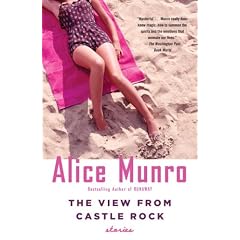 As I am at the halfway point, I am thinking of nominating this book for the most incongrous (or at least misleading) book cover of the year. Maybe it's more in keeping with what I'll find in the second half of the book, but so far there's been nothing which suggests the chicklit vibe the cover gives off. I'm all for chicklit, but only when appropriately labeled.
UPDATE: Ha, it looks like the book cover matches my site, or vice-versa as I saw the book cover first. I was actually going for that chicklit-ish look, to go with the title if nothing else.
I remember visiting family in England--their existence was a surprise--and talking to my aunt (I call her than, but she was probably some degree of cousin once removed). She, like the majority of my "aunts" and female family acquaintances, was a nurse. Being a nurse in England is apparently not like being a nurse in the U.S. Here I imagine that the relative scarcity of nurses made it easy to live well by working hard. There, it seemed that the same hard work yielded less, because living in England (especially London) seemed to be that much more expensive, and probably the health care system's place in society made a difference as well. I think of my parents who both work in what I would call upscale private hospitals, with wood floors and glass walls and cafès for patients (and cafeterias for staff, where I ate when I either worked or volunteered at either hospital). These are things that are probably not so common in a socialized health care system, though honestly I don't really know.
I'm digressing--my point was that I was talking to this aunt, and she mentioned how either her son or another child of his generation was thinking of becoming a nurse. And of how, well, disappointing, or something to that effect this was. She had emigrated after all, became a nurse to facilitate that move to another country and away from home, and now when these children of a new generation, with all the supposed opportunities available to them bought by their parents' sacrifice--why become a nurse?
How different from my mother's reaction; even now she points out that in difficult times nursing would have been at least an available back-up option. But that was the point I guess--the security of it. Her ambition was limited to money, and did not extend to career. And she likes her job, which I think she does well. I wonder sometimes if she feels the strain of this choice now, as I suspect my father always has.
Ah, such is life. I used to wonder at those people who were in law school who always knew that they wanted to be there, whereas the year previous I had barely known, only knew what I didn't want. I'm not special or unique in this, I know, but I think people like me in this way are less apt to talk about how we end up where we are than those whose lives are guided by the certainty we lack.
As I am at the halfway point, I am thinking of nominating this book for the most incongrous (or at least misleading) book cover of the year. Maybe it's more in keeping with what I'll find in the second half of the book, but so far there's been nothing which suggests the chicklit vibe the cover gives off. I'm all for chicklit, but only when appropriately labeled.UPDATE: Ha, it looks like the book cover matches my site, or vice-versa as I saw the book cover first. I was actually going for that chicklit-ish look, to go with the title if nothing else.
Sunday, January 4, 2009
Book passage
Context: One brother thinks of another who decided not to follow the rest of his family and ends up dying prematurely. The brother acknowledges that given the circumstances, the death was more to do with bad luck than a bad choice. And yet.
Subscribe to:
Posts (Atom)